

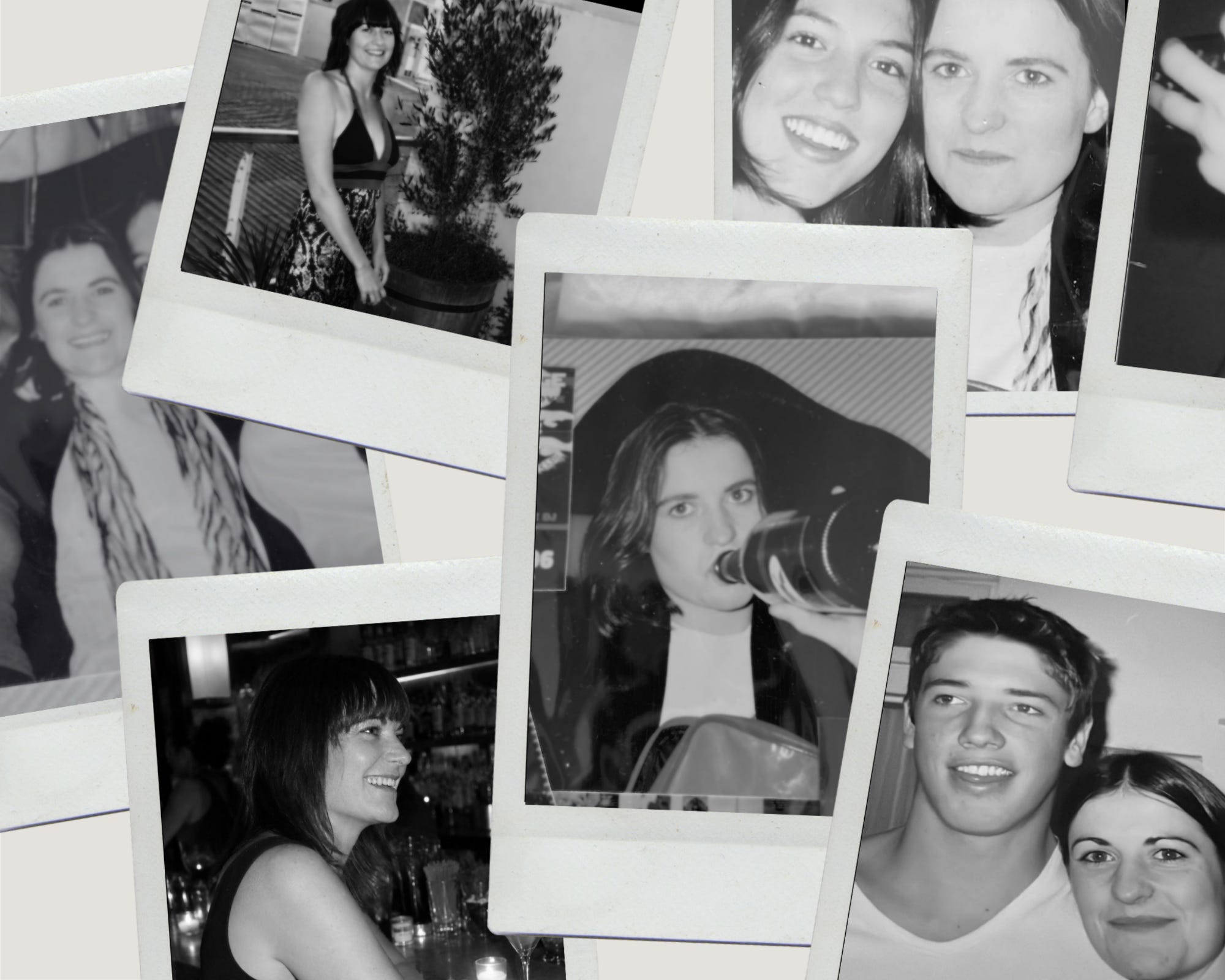
Nobody really tells you that raising four teenage boys crossing the same thresholds at the same time can feel slightly like living inside a very loud social experiment.
One minute they are building Lego on the kitchen floor and asking whether worms have eyes. The next, you find yourself trying to help them navigate friendships, first relationships, identity, social media, school, anxiety, independence and whatever fresh existential crisis has arrived that week. Almost overnight, they stopped looking to me for belonging, approval and certainty and began searching for those things beyond the walls of our home.
As they pushed further towards independence, I found myself thinking more and more about my own adolescence. Fourteen-year-old me began appearing with increasing regularity.
She arrived in the moments I watched my sons struggle to find their place in the world. She appeared when they came home wounded by something that had happened at school, or sat quietly questioning where they fitted, or seemed suddenly unsure of themselves.
She was instantly recognisable.
She wore red jeans, a checked shirt and black Dr Martens. Her bedroom walls were covered in magazine cuttings. Somewhere between Ace of Base, Snoop Dogg and the first pull of rave culture, she was trying desperately to work out who she was. She longed to belong and desperately wanted to stand apart at the same time. I could suddenly see her loneliness. Her confusion. The things she was carrying that nobody else could see.
For years I had remembered her mostly through the experiences of her life. As I began spending time with her again, I found myself meeting the person herself. And to my surprise, I found her fascinating. I realised that I finally felt safe enough to look back. The years had given me distance. Motherhood had given me compassion. Life had given me perspective. I could look at her through the eyes of love rather than judgement.
For the first time, the memoir I had considered writing for many years felt possible.
And yet the process was nothing like I had imagined. I thought it would involve opening a laptop, making a sensible chapter plan and proceeding in some orderly fashion. It turned out that my subconscious had very different ideas. The stories arrived as people. Some mornings I would sit quietly for twenty minutes before writing a single word. I would wait to see who arrived. Sometimes it was the teenager. Sometimes the young mother. Sometimes the woman living in South Africa. Sometimes the frightened girl. I learned not to choose the story. The story usually chose me. I would spend time with that part of me first. I would listen to her voice, her perspective, her understanding of what was happening. I would try to inhabit her world rather than observing it from a distance. From there the writing would begin.
At first there was no structure. I thought I was creating something more fragmented, moving backwards and forwards through time, weaving together memories and reflections. I assumed the book would move associatively, following feeling rather than chronology. But gradually the shape revealed itself. Individual pieces began finding one another. Certain events called to other events. A timeline slowly emerged. Only after enough fragments existed did I begin to fill in the spaces between them.
And the deeper I travelled into the story, the harder it became to avoid a simple question.
What exactly had I spent forty-four years believing about myself?
My writing slowly became an inventory of the life I had lived.
What had sustained me? What had wounded me? Which decisions had brought me closer to myself? Which had carried me further away? What beliefs had quietly organised my life? Which stories had I carried for decades without ever questioning whether they were true?
Although I had spent many years working with different parts of my story within therapeutic and healing spaces, there was something profoundly different about encountering them through the lens of an entire life.
In therapy we often work with particular wounds, relationships or moments. We return to individual events and explore the feelings they carry. The memoir widened the frame. Experiences that had once existed in isolation suddenly acquired context, depth and meaning. I could see what had come before them, what had followed them, and the beliefs that had quietly woven themselves between them.
I also began to question some of the stories I had carried for decades.
As I researched, spoke to family members, revisited places and gathered together forgotten details, I discovered that some of the things I believed to be true were not quite as I remembered them. I realised that my memories had been shaped by the age I was, the fears I carried and the understanding available to me at the time.
When I was nine years old, my mother took my brother and me back to South Africa after her marriage to my father had ended. I had not been told we were leaving. My father had not been told because my mother feared he would prevent us from going. For years I held that memory through the eyes of the child who experienced it. A little girl suddenly finding herself at Heathrow airport about to board an aeroplane. Writing the book allowed me to step outside that child’s perspective for the first time. I began to wonder what circumstances had led my mother to make such a decision. What fears she may have carried. What courage it might have required. What she believed she was protecting. I found myself seeing her differently.
The same thing happened with my father.
For many years I carried the story that he had abandoned us. Yet as I wrote, I began to recognise parts of myself within him. I saw a man who struggled with the expectations and structures of the world around him. Someone who sought freedom, escape and ways of living that felt more authentic. In some ways, I realised that I was not so different. I too have spent much of my life trying to find ways to escape worlds that felt rigid, confining or untrue. I too have longed for freedom, for something more alive, more authentic, more connected. The older story had cast him as the one who left. The newer story allowed me to hold his humanity, his longing, his courage and his limitations all at once.
And it left me wondering how many of the stories we carry about ourselves and the people we love are only partial truths, shaped by the age we were, the wounds we carried, and the limited view we had at the time.
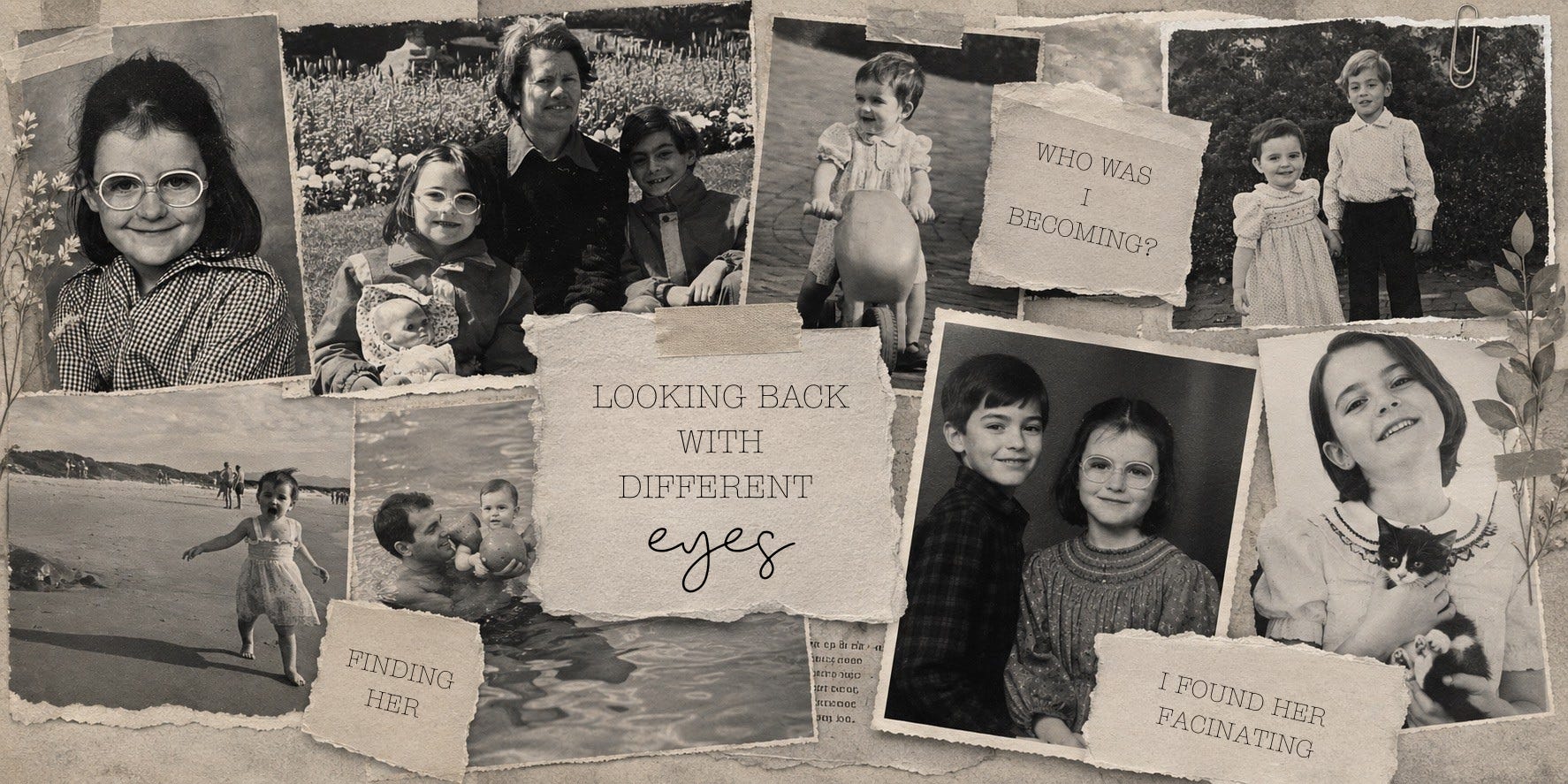
Many of us move through life believing the stories we inherited about ourselves.
I am too much.
I am not enough.
I have to earn love.
I do not belong.
Writing invited me to sit beside these beliefs and ask:
Is it true?
Is it true that I was abandoned?
Is it true that I was unlovable?
Is it true that I was alone?
The events themselves had not changed. My adoption had not changed. My losses had not changed. The difficult choices I made had not changed. What changed was my relationship to the woman who had lived them. I began to see that many of the choices I had judged most harshly had been made by parts of me that were trying to survive, belong, protect or find home.
Perhaps that has been the greatest gift of writing this book. Not rewriting the facts of my life. But rewriting the way I hold them. The fourteen-year-old who thought she had to become someone else in order to belong. The twenty-seven-year-old who confused freedom with self-destruction. The young mother trying to keep five children alive while quietly disappearing herself. The woman who spent years searching continents for a home she carried inside her all along.
As I sat with each of them, listening to their voices and allowing them to tell their stories, I discovered that they were not asking to be fixed. They wanted a witness. They wanted someone to sit beside them long enough to understand. That is what memoir has become for me. Not simply an act of remembering, but an act of witnessing. A way of sitting beside the people we once were with enough distance, compassion and curiosity to ask whether the stories we have carried for decades are the only stories available to us.
Over these last nine months I have not only written a book.
I have rewritten my relationship with my own life.
It feels like that is what all stories offer us. Not certainty, but the possibility of seeing ourselves and one another differently.
If you are curious to explore the stories that shaped my own life, and the ways they have been held, questioned and rewritten through the writing of Wild Belonging, I would love to welcome you into the early access community for the book.
Over the coming months I will be sharing excerpts, reflections and pieces from the writing journey as the book slowly makes its way into the world.
Brilliant. Self judgement prevents understanding. When one judges one is no longer even looking. Looking is much harder, more creative, and much more rewarding.